Tooth Cavity: Symptoms, Causes, And Treatments
A small cavity rarely stays small. What starts as mild sensitivity, food getting stuck, or…
Read More


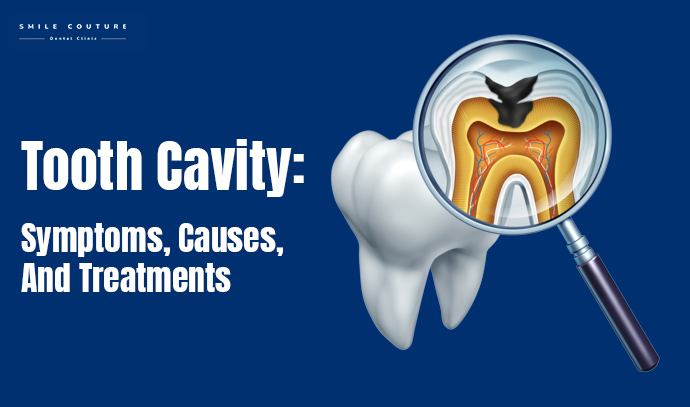
A small cavity rarely stays small. What starts as mild sensitivity, food getting stuck, or a tiny dark spot can slowly turn into deeper decay, pain, and a bigger treatment later. That is why understanding tooth cavity symptoms, tooth cavity causes, and tooth cavity treatments early can save both your tooth and your time.
At Smile Couture Dental Clinic in Andheri West, patients are evaluated with a diagnosis-first approach, and the clinic offers fillings, root canal treatment, extractions, and other general dentistry services under one roof.
If you are searching for a dental clinic near me, a dental clinic in lokhandwala, or a dental clinic in Andheri West, this guide will help you understand what a cavity feels like, why it happens, and which treatment may be needed.
The most common tooth cavity symptoms are sensitivity, food getting stuck, a visible spot on the tooth, and pain while eating. Some cavities hurt early. Some do not hurt until the decay becomes deep.
Here are the signs people notice most often.
One important thing to know is this: not every cavity hurts in the beginning. That is why some people ignore early tooth cavity symptoms until the problem becomes harder to treat.
The short answer is simple. Tooth cavity causes usually start with plaque, bacteria, and repeated acid attack on the tooth surface. Over time, the enamel weakens and the decay moves deeper.
The most common tooth cavity causes include:
A cavity is not just bad luck. It usually builds up slowly through habits, bacteria, and lack of early treatment.
A dentist diagnoses a cavity by checking the tooth clinically and using X-rays when needed. The goal is to understand whether the decay is early, moderate, or already close to the nerve.
At Smile Couture, diagnosis-led care is part of how treatment planning begins, and the clinic highlights digital scans, X-rays, and specialist-led evaluation across its services.
A cavity visit may include:
If you are searching online for a dental clinic near me, this is one of the biggest things to compare. A good diagnosis helps keep treatment smaller and more predictable.
The right treatment depends on how deep the decay has gone. This is where tooth cavity treatments can vary a lot from one patient to another.
The most common tooth cavity treatments are:
Fluoride Support For Very Early Decay
If the damage is still at the enamel stage and has not formed a deep hole, your dentist may advise fluoride support and monitoring.
Dental Fillings For Small To Moderate Cavities
This is the most common treatment. The decayed part is removed and the tooth is restored with a filling.
Inlays Or Onlays For Bigger Cavities
If the tooth has lost more structure than a simple filling can safely replace, a stronger indirect restoration may be recommended.
Root Canal Treatment For Deep Decay
If the cavity reaches the nerve, the tooth may need root canal treatment to remove infection and save the tooth. Smile Couture offers root canal treatment in Andheri West and describes it as a tooth-saving option for severely damaged or infected teeth.
Crown For A Weak Tooth
If a cavity has weakened the tooth a lot, a crown may be needed after treatment to protect it from breaking.
Extraction Only When The Tooth Cannot Be Saved
This is usually the last option when the tooth is too damaged to restore safely.
No, a true cavity hole does not heal on its own. Very early enamel damage may sometimes be slowed or reversed, but once decay creates a hole in the tooth, treatment is usually needed.
This is one of the biggest reasons people delay care. They hope the pain will settle and the cavity will stop. In reality, untreated decay often gets deeper with time.
So if you have clear tooth cavity symptoms, it is better to get checked early than wait for stronger pain later.
You should see a dentist when the signs keep coming back, when one tooth feels different from the others, or when the pain starts affecting eating.
Book an appointment if you notice:
If you are searching dental clinic in Andheri West, dental clinic near me, or dental hospital in Andheri West because a tooth has started bothering you, this is usually the stage where a check-up should not be delayed.
Cavity prevention is not complicated, but it does need consistency. Once you know the main tooth cavity causes, prevention becomes much easier.
These habits help a lot:
Small daily habits do more for cavity prevention than occasional effort after pain begins.
If you have a cavity, you want two things: a clear answer and the right treatment before the problem grows.
Smile Couture Dental Clinic is based in Andheri West, Mumbai, and the clinic offers fillings, root canal treatment, extractions, and general dentistry services. It is also easy to reach for patients looking for a dental clinic in Lokhandwala or a dental clinic in Andheri West. The clinic lists phone booking, WhatsApp booking, and contact support through its official website.
Patients often shortlist Smile Couture when they are searching for:
If one tooth feels sensitive, traps food, or has started hurting, it is better to get a diagnosis before the decay gets deeper.
Smile Couture Dental Clinic is in Andheri West, Mumbai, and you can book your appointment by phone or WhatsApp at +91 81040 54109, or by calling us at +91 93264 52609.
If you are looking for a dental hospital in Andheri West, a dental clinic near me, or a local cavity consultation in Andheri West, this is the right stage to book rather than wait for stronger pain.
Cavities are common, but they should not be ignored. The earlier they are diagnosed, the simpler the treatment usually is. If you are noticing tooth cavity symptoms, trying to understand tooth cavity causes, or comparing tooth cavity treatments, the best next step is a proper dental evaluation.
Smile Couture Dental Clinic in Andheri West offers diagnosis-led care and multiple treatment options for damaged or decayed teeth, including fillings and root canal treatment. If you want a clear treatment plan from a nearby team, book your consultation and get the tooth checked before the cavity becomes a bigger problem.
1. What Are The First Signs Of A Tooth Cavity?
The first signs of a cavity are usually sensitivity, food getting stuck, and a visible white, brown, or dark spot on the tooth. Some people also notice mild pain when eating sweets or cold foods. Early cavities may not always hurt, which is why even small changes should be checked.
2. Can A Cavity Go Away Without Treatment?
A true cavity hole does not go away on its own. Very early enamel damage may sometimes be controlled, but once decay has formed a hole, it usually needs treatment. Waiting often allows the cavity to get deeper.
3. Does Cavity Treatment Hurt?
Most small cavity treatments are straightforward and manageable. Fillings are usually done with local anaesthesia when needed, and deeper treatments are planned based on how close the decay is to the nerve. The goal is to remove the decay and restore comfort, not increase pain.
4. How Do Dentists Treat Small Cavities?
Small cavities are usually treated with fillings after the decayed part is removed. If the decay is caught very early, fluoride support and monitoring may sometimes be enough. The exact treatment depends on how much tooth structure is involved.
5. When Does A Cavity Need Root Canal Treatment?
A cavity may need root canal treatment when the decay reaches the nerve or causes infection inside the tooth. This usually happens when the pain becomes stronger, lingers longer, or starts affecting chewing and sleep. Root canal treatment is used to save the tooth when a simple filling is no longer enough.
6. How Quickly Can A Small Cavity Get Worse?
A small cavity can worsen slowly or faster depending on diet, oral hygiene, saliva flow, and the location of the tooth. Frequent sugar exposure and delayed care can speed up the damage. That is why early diagnosis matters.
7. Is A Black Spot Always A Cavity?
Not always, but it should not be ignored. A dark spot can be staining, early decay, or an older damaged area. A dental exam helps confirm whether it is a cavity and whether treatment is needed.
A small cavity rarely stays small. What starts as mild sensitivity, food getting stuck, or…
Read More
If you are planning braces, the first confusion is usually not about brackets. It is…
Read More
If you are missing a tooth, it is normal to feel confused. Many patients ask…
Read More
Do you feel a sharp jolt when you breathe cold air? Does hot tea suddenly…
Read More
If you are searching for Teeth Scaling Cost in Mumbai, you are probably trying to…
Read More
Many people come to us with the same worry: “My tooth needs a crown, but…
Read More
If you have been advised to get a tooth cap, your first concern is usually…
Read More
Gums are the base of every smile. If they stay strong, your teeth feel firm,…
Read More
Yes, you can fix crooked teeth without visible brackets and wires of braces. Options include…
Read More
Location: Andheri West, Mumbai, Maharashtra 400053
Phone: +91 93264 52609
