Dental Clinic in Lokhandwala for Dental Implants and…
A tooth cracks at dinner, or an old filling finally gives way. Someone tells you…
Read More

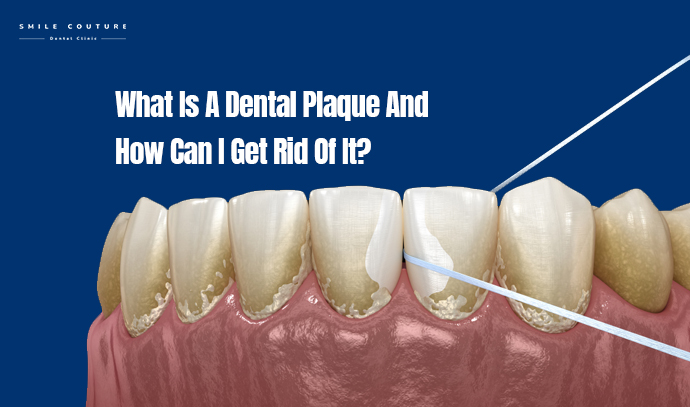
Dental plaque is a soft, sticky layer of germs that keeps forming on your teeth every few hours. If you do not clean it well, it can lead to cavities, bad breath, gum swelling and hard tartar.
The good news is simple. You can control plaque with correct brushing, daily flossing, smart food choices and regular professional cleaning. Smile Couture Dental Clinic in Andheri West helps patients protect their teeth through preventive care, gentle dental cleaning and clear home care guidance.
Our clinic brings comfort focused treatment, modern cleaning methods and personalised dental advice under one roof. This guide is written by an expert dentist from Smile Couture.
Read on to understand plaque in simple words and learn how to remove it before it damages your smile each day.
Dental plaque is a sticky, almost colourless layer of germs that forms on your teeth every day.
It can start forming again within 4 to 12 hours after brushing. When you eat sweets, bread, biscuits, rice or other starchy foods, the germs in plaque feed on them. They then release acids. These acids slowly weaken the outer tooth layer.
This is why plaque often leads to tooth decay, gum swelling and bad breath. Causes, prevention, treatment & removal of dental plaque starts with one simple rule. You need to clean plaque every day before it turns hard.
Plaque usually sits near the gumline, between teeth and on the back teeth. These areas need extra care because your brush may not reach them well.
Plaque forms when germs, food bits and saliva mix together on your teeth.
Your mouth always has bacteria. Some bacteria help the mouth stay balanced. Some harmful bacteria stick to the teeth and grow when food stays behind. This creates a soft layer called plaque.
Plaque grows faster in these areas:
Soft plaque can start turning into tartar within 24 to 72 hours. Tartar means hardened plaque. Once plaque becomes tartar, you cannot remove it with a brush at home.
That is why daily cleaning matters. You do not fight plaque once a week. You control it every morning and night.
Plaque is soft and you can remove it at home, but tartar is hard and needs professional cleaning.
| Plaque | Tartar |
|---|---|
| Soft and sticky layer of germs | Hard deposit formed from old plaque |
| Usually colourless or pale yellow | Yellow, brown or dark deposit |
| Forms within a few hours | Can form in 24 to 72 hours |
| Comes off with brushing and flossing | Needs dental scaling |
| Causes early gum swelling and cavities | Can worsen gum disease and bad breath |
| Feels like a rough film | Feels like a hard crust on teeth |
Tartar often collects behind lower front teeth and near the gumline. Dentists remove it with scalers and ultrasonic cleaners. Ultrasonic cleaning uses tiny vibrations and water spray to break tartar safely.
You can remove soft plaque at home with correct brushing, daily flossing, mouthwash and better food habits.
Home care works only when you follow the right method. Fast brushing for 30 seconds will not clean your teeth well. You need proper steps and daily consistency.
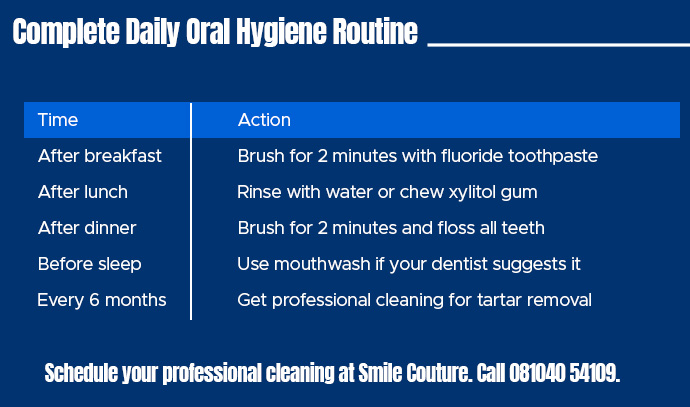
Brush twice daily for 2 full minutes with a soft brush and fluoride toothpaste.
Hold your brush at a 45 degree angle toward the gumline. Use small round movements. Do not scrub hard. Clean the outer side, inner side and chewing side of every tooth.
Use toothpaste with 1000 to 1500 ppm fluoride. Fluoride helps make the tooth surface stronger after acid attacks. Use only a pea sized amount.
Electric brushes can remove about 21% more plaque than manual brushes. A manual brush also works well when you use it slowly and correctly.
Floss removes plaque from tight spaces where your brush cannot reach.
A toothbrush cannot clean fully between teeth. These hidden spaces can hold almost 40% of plaque. If you skip flossing, you leave germs behind every day.
Take about 18 inches of floss. Wrap it around your fingers. Curve it around each tooth in a C shape. Move it gently up and down. Do not snap it into the gums.
Floss before brushing at night. This loosens food bits first. Then brushing clears them away.
Mouthwash can reduce germs, but it cannot replace brushing or flossing.
Use an antibacterial mouthwash after brushing and flossing. Swish it for 30 seconds, then spit it out. Do not eat or drink for 30 minutes after rinsing.
Some mouthwashes contain ingredients like chlorhexidine or cetylpyridinium chloride. These help lower plaque forming germs. Your dentist may suggest a stronger rinse if you have gum swelling.
Do not use strong mouthwash without advice for long periods. Some medicated rinses can stain teeth when people use them incorrectly.
You need professional cleaning because home tools cannot remove hard tartar.
Once plaque hardens, brushing will not remove it. A dentist or hygienist removes tartar with scaling. They clean above and below the gumline. Then they polish the teeth so fresh plaque sticks less easily.
If you live nearby and keep searching for a dental clinic in Andheri West, regular cleanings can help you control plaque before it causes pain. Smile Couture also guides you on the correct brush, floss and mouthwash for your mouth.
People looking for a dental clinic in Andheri should not wait for bleeding gums to become severe. Early cleaning feels simpler and saves more natural tooth structure.
You can reduce plaque by limiting sugar, sticky snacks and frequent sipping of sweet drinks.
Plaque germs react quickly after sugar touches the mouth. They start making acids within seconds. These acids attack the tooth surface again and again.
Choose tooth friendly snacks like:
Drink water after meals when you cannot brush. Water helps wash away food bits. It also reduces the acid effect in your mouth.
Advanced tools help you clean better when you have braces, implants, gaps, sensitivity or weak brushing habits.
Plaque may be harming your teeth if you notice bleeding gums, bad breath, tartar or tooth sensitivity.
Watch for these signs:
Do not ignore these signs for weeks. Early care can stop small plaque problems from becoming painful treatment needs.
Smile Couture helps you prevent plaque with professional cleaning, dentist led advice and simple home care plans.
The clinic offers general dentistry, dental cleaning, fillings, cosmetic dentistry and restorative dentistry. Its website highlights advanced care, patient comfort and a complete range of oral health services at its Andheri West clinic.
Smile Couture Dental Clinic also focuses on preventive dentistry and patient comfort. Patients mention clear explanations, clean clinic space, follow ups and gentle care in their reviews.
If you want the best dental clinic in Andheri West for plaque control, choose a clinic that explains your problem clearly. Smile Couture helps you understand where plaque builds up, why it keeps coming back and how to stop it daily.
Get expert plaque removal and prevention care at Smile Couture. Call 081040 54109 today.
Can plaque build up even if you brush every day?
Yes, plaque can still build up if you miss areas like the gumline or between teeth. You need correct technique and daily flossing for full cleaning.
Does drinking water help reduce plaque in your mouth?
Yes, drinking water helps wash away food particles and reduces acid in your mouth. It supports cleaner teeth but does not replace brushing or flossing.
Can plaque cause stains on your teeth over time?
Yes, plaque can attract food colours and turn into yellow stains if not cleaned daily. Over time, this can also harden into visible tartar.
Is plaque worse at night compared to daytime?
Yes, plaque can grow faster at night because saliva flow reduces when you sleep. That is why night brushing is very important.
Can stress or health issues increase plaque buildup?
Yes, stress and certain health conditions can reduce saliva and affect your gums. This can make plaque grow faster and harder to control.
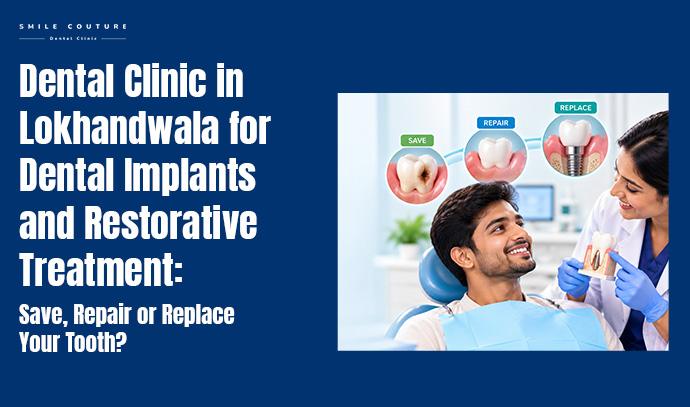
A tooth cracks at dinner, or an old filling finally gives way. Someone tells you…
Read More
You see it in every photo. A dull tooth or a small gap that the…
Read More
You’ve tried the mouthwash along with brushing twice a day. The freshness lasts maybe twenty…
Read More
You’ve been putting off that dental visit. The fear is real. Most people picture discomfort,…
Read More
You brush every morning and night. You still ended up with a cavity at your…
Read More
Searching for the most advanced dental clinic in Lokhandwala, or just typed “dentist near me”…
Read More
Most people don’t avoid the dentist because they’re lazy. They avoid it because they don’t…
Read More
Trying to figure out whether you need a smile makeover or full mouth rehabilitation? They…
Read More Dental plaque is a soft, sticky layer of germs that keeps forming on your teeth…
Read More
Location: Andheri West, Mumbai, Maharashtra 400053
Phone: 08104054109.
